

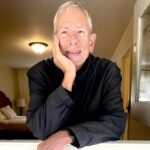
I wrote the following meditation during the day and night of Sept. 11, 2001. After the end of that month, I did not look at it for the next 24 years. Indeed, I had largely forgotten this meditation—until I was going through files of my writing that had been sitting dormant for years and even decades. That’s when the manilla folder with its protruding lip and my words on the lip, “Of Herds and the Twoness of Things,” caught my eye. Once I began reading I was gripped and could not stop. At the end of my reading, something Virginia Woolf says in “Sketches of the Past” came back to me: “We are sealed vessels afloat upon what it is convenient to call reality; at some moments, without a reason, without an effort, the sealing matter cracks; in floods reality.” Here is the sealed vessel I was on that fateful day 25 years ago.
1
At 8:10 a.m. Chicago time I am lying in bed reading when the phone rings. “Turn on your TV. A plane just crashed into the World Trade Center,” my wife shouts into the phone, then hangs up. I go down to the finished room in the basement and turn on the TV. The picture shows both towers with gaping holes in them smoking away. When I see that both towers have been struck, I am almost without breath. I flip channels: everyone’s on it, no exceptions. On every channel the anchors are talking slowly, letting huge gaps occur between words and taking long pauses between sentences. They are trying to fill time and looking left and right for help because all they have to say is said by these two towers just standing there smoking into the sky. And then, because I have a dental appointment in a few minutes, I quarantine my breathlessness and gaping eyes.
My dentist is not in today. His replacement introduces herself to me as Dr. Liz. She’s only a couple months out of dental school, not more than 25. Even with her surgical mask on I can see she’s a fledgling. It’s only my semi-annual checkup and cleaning, so it’s not a big deal if I get a rookie. Still, where is my dentist? I have been seeing him and his son for over 15 years now. Through her surgical mask Dr. Liz says, “He’s not in today. His daughter might be on the flight from Boston to L.A.” For the next 45 minutes her words hang in the air like neon hieroglyphs.
As Dr. Liz works, she talks and I go uh-huh. Her talk is like a small sparrow hopping from one branch to another. One moment she is telling me about the mutual fund she just bought and worrying it will plummet on this news. Then she is worrying that if the next attack is in Chicago the water might not be safe to drink. Then she is wiping away tears of fear for the dentist’s daughter. Then back to the mutual fund, the attack on Chicago, the people in New York, the dentist’s daughter. All the while she is scraping away tartar. Intermittently, when she pulls the instruments out of my mouth and tells me to rinse, I gush out my own words that have been racing around in my head since I first looked at my TV an hour earlier. Though the attack was inevitable, I tell the fledgling, I had imagined it differently: many suitcase bombs in washrooms of famous buildings going off at the same time; planes spraying anthrax or nerve gas into the air over multiple cities on the same day; a biological or chemical agent introduced into the ventilating systems of large buildings in multiple cities on the same day; the poisoning of the water in many cities at the same time. Or a Black Sunday scenario. Who could stop a plane loaded with explosives from flying right down into the Super Bowl? Our country is there for the picking.
But something is calming me too. Outside the window is an impossibly blue sunlit sky on one of the most perfect days one could ask for. I am watching the light on the leaves of the trees just outside this office and thinking how beautiful it is and how lucky we are to live in such a world. And then I am wondering whether we have this beautiful world any more. Have we been stockpiling our innocence for decades, like so much money in a bank, only to see that our currency is counterfeit?
And then I wonder who created this attack? If it is Osama bin Laden, as the announcer on the little TV near the receptionist’s desk keeps suggesting, I suspect it is the result of a deeply felt grievance. But I know almost nothing about this man with a perpetually smiling gentle face. I don’t even know how to spell his name. And then I realize how little I know about anything, how so much of what I “know” amounts to sentences someone else has written about someone else or photographs someone else has taken of someplace else. So much of what we “know” in the modern world is second- and third-hand. We no longer know with our fingers and hands and ears and eyes; we know through someone else’s words.
As Dr. Liz is scraping away, I keep seeing a picture I saw in the paper a few days ago of three Muslim women wrapped in chadors crying over the killing of a Muslim boy by Israeli soldiers. It isn’t the killing or the sorrow or the revenge I am seeing as I look at this picture in my mind’s eye. It is the herd I keep seeing, for this picture conjures up countless other pictures of Muslim women wrapped from head to toe in black, always the same outfit, a woolen prison they put on each day quite willingly because, I imagine, they are allowed to know so little of any other way to be, because they have been forced to be this way from birth. These women aren’t the cause of this attack—they themselves have been silently and ubiquitously attacked by enforced ignorance every day of their lives—but the pictures of them are an emblem of the cause. That cause is the unthinking herd that believes it knows the truth and demands everyone else know the same truth. No dialogue is possible with such people, for the truth as they know it is God-given. Such people who do not think, but instead believe, and therefore know, are the real seeds of this attack. It is in this dark bed of knowing that the seed of this attack was nourished into flower.
But before we feel superior to these people, we ought to reflect on our own condition. All of us who pray to saints (of whom we know little more than a sentence or two but whose icons have been with us from childhood), all of us who bend over rosary beads racing through words to order up the things we want from this world, all of us whose practice of our religion is little more than a kind of superstition that tries to manipulate the universe for our own narrow ends, like winning football games or the lottery: are we essentially any different from these terrorists?
Yes, some of us are, but only in two respects, and only thinly so. In addition to all the superstitions and pressures of the herd that we grew up with—my classmates and I hoped we would be courageous enough to face martyrdom—we were also nourished on a belief in the rights and liberties of the individual and a belief in the power of reason. This belief in individual liberties and the power of reason is all that separates us from these terrorists. It is a terribly thin veneer, and beneath this veneer always pressing to explode is the overwhelming power of the herd. If you doubt this, reflect for a moment on the way the Roman Church treated heretics, Galileo, Jews; reflect on the way Americans treated blacks for centuries. Reflect on the Salem witch trials, the intolerance of some Christian fundamentalists, the immense, unbearable weight of political correctness.
The herd: it is one of the things I most fear, not just from terrorists but from my fellow citizens, even from my friends and family. It is always there pressing, wanting all of us to conform. Even when conforming is ridiculous, like the wearing of shredded jeans that cost hundreds of dollars or 4-inch spiked shoes that destroy the wearers’ feet.
I am thinking right now of an altogether very decent bunch of guys I get together with a couple of times a month. We call it a Men’s Group. It has been going on for nearly twelve years now, but I never sit through a meeting that I’m not keenly aware of all the politically correct ways I am expected to think and speak and behave. There are no written codes—written codes may be the weakest codes of all—but there is a certain something always insisting on what is permissible and not permissible to say. When I risk uttering an impermissible thought, I watch myself slipping away in their eyes.
Just now the voice on the TV announces that the second World Trade Center tower has collapsed. The TV also announces that some kind of attack has taken place at the Pentagon.
When Dr. Liz is half way through with my mouth, word comes that the dentist’s daughter was not on that flight; she missed it “by five minutes.” And my fledgling doctor has tears in her eyes.
At the desk, as I’m paying for today’s treatment, the tiny TV is covering the news of the attack. In the background the piped-in radio is playing the Bee Gees’s “How Deep Is Your Love?” No one says a word about the irony.
Outside I walk across a lawn still wet with dew. The grass is thick and green and heartbreakingly beautiful.
In my car driving to my next stop, I don’t feel quite real, and at the same time I feel perfectly normal. I am running my errands, following my schedule; it is all very normal, but I’m doing everything inside a bell jar.
I pull up to the drive-in lane at my bank. I’m depositing some checks. I fill out the deposit slip, sign the checks, put them into a vacuum tube. A few minutes later the receipt comes back to me. The teller says nothing about what’s happened; she just apologizes for taking “so long.”
My next stop is a neighbor’s house. I have never met this person. He lives at the other end of my block. His wife proposed a block co-op to share skills and tools, and I am returning the questionnaire she put in my door a few days earlier. But this house happens also to be the same architecture as mine, only with a large addition at the rear. For years I have wanted to see the inside of this house to get an idea how an addition to my own house might look. I ring the bell, introduce myself, and my neighbor, whom I’ve never seen before, invites me in.
Neither of us mentions the attack. We talk as if today were an ordinary day. The entire conversation is about the addition. I notice a lovely garden at the rear, a peaceful green place with two enormous shrubs in the middle of the yard, not along the edge. The way these shrubs block off the back side of the yard makes the back of the lot a kind of secret garden. I like secret gardens: hedges that wall off a green private space. They just might be the most beautiful spaces in this whole world. And then I think we may not have such places any more. And then I know I’m overreacting.
At the door our conversation ends when my neighbor tells me he’s retired (though he looks to be only in his early 50s), that he used to be a CPA, that with the stock market plunge of the last year and a half he might have to return to work but that will be especially difficult because the field of public accounting is continually in flux and he wouldn’t know it well any more. I tell him I thought the laws of accounting were as fixed and immutable as stone. No, he says, public accounting is always changing. At no point do either of us mention the attack. We talk as if the world were just fine, as if the rules binding it together were as immutable as I had thought the laws of accounting were.
My next errand, which I determined to take care of two days ago, is to use the battery tester at the hardware store to see which of my used AA batteries have enough life left in them to keep. I stand at the end of the counter testing one battery after another. There are a couple of other people at the counter, and I feel like I’m in the way, but I keep on testing any way. Three-quarters of them are “replace,” one is at the high end of “replace,” and four are “good.” After some deliberation, I throw away the “replace” ones and keep the one at the high end of “replace” and the good ones. As I’m testing the batteries, I think how surreal all this is: testing 50-cent batteries while our country is under attack and thousands have just been killed. And I haven’t heard a single conversation about it in the store, not one.
Walking back to my car with the good batteries, I suddenly remember the day Kennedy was assassinated: the utter finality of that day, the sharp divide that day made in our lives, the way everybody later remembered exactly where they were when they heard the news of the assassination. I conjure it again as I’m crossing the street. My mother waking me in the early evening from an all-day sleep after working the third shift in a printing plant. Her standing just inside my bedroom door, the hall light high up and behind the silhouette of her head. The brass-rung bookcase beside my bed. Her voice, nervous and matter-of-fact at the same time, saying Kennedy had been assassinated. My disbelief at first. Then after a minute the thought that Johnson had lured Kennedy to Texas to assassinate him. It’s all there etched forever. And then I think how much less significant that day was than this one. Oswald’s was a single mission. Kennedy’s was a single death. Today’s attack is vastly larger and reaches vastly further. And it is only the beginning. That’s what I am thinking as I cross the street and watch the bright sunlight wash the asphalt parking lot.
At home my youngest son has left a message on my answering machine. He wants to know if I know what has been happening . . . in the world today. He pauses before “in the world.” And then he emphasizes in the world today and hangs up. He simply doesn’t have the words to describe what has happened or what he is feeling. Neither do I. That is why I am trying to set it down now.
My next errand is to Jewel’s and Dominic’s. I have to return a bag of powdered sugar, a bag of brown sugar, a pound-cake mix, a bag of chopped nuts, a bottle of Henri’s salad dressing, and two boxes of Shake ‘n Bake. My wife had bought them God knows when, but two days ago I got frustrated trying to find room in the fridge and cabinets, so I removed everything that was unopened and we were not likely to use and stacked them up for return to the store. Today was the day for that return, no matter that the plate tectonics of existence had sent one plate slamming over another. Today was also the day I had set aside to pick up sale items at both stores: two boxes of red raspberries for the price of one, two bottles of cider for the price of one, two cartons of orange juice for the price of one, nectarines at less than half price, some lettuce and hamburger buns I needed for the rest of the week. On the spur of the moment I pick up some cashews too.
While I am picking out the lettuce, a disembodied voice says that the sprayer will now spray the vegetables “to keep them fresher.” Over the hissing of the sprayer and Gene Kelly bouncing through “Singin’ in the Rain” I can hear the store’s PA system playing “Sometimes All I Need Is the Air That I Breathe.” My mind conjures an image of all those people trapped in the smoke of those towers. I wonder about the air they needed to breathe. And then I remember a mugger’s life-and-death choke hold on me late one night three weeks ago. For the two minutes that we struggled, each of us with all our might, all I could think of was AIR. Air was the only thing in the world. I buy six ciders and four O.J.s because they are terrific buys. They are out of raspberries so I get a rain check. No one is talking about the attack in the store. Is it all my imagination? I wonder as I’m standing in the checkout line. But then two men and a woman behind me bring it up. One of the men says it’s going to cause havoc for the lawyers; he is grinning at the other two; they smile back feebly.
Out in the parking lot I look up at the trees that are all around this neighborhood, the trees and the blue sky—and the light seems to be light from a movie set, something out of a David Lynch movie, the white light filmmakers use to suggest an alien world. I imagine I am walking in slow motion. I am aware that each step is one of a kind, that each step is always a thing that happens only once, that no matter how many steps we might take in our lives each one is a thing unto itself, an unrepeatable event. I know this is strange thinking.
I suddenly realize why all day I have been afraid to say anything to anyone else about what has happened. It’s because I don’t know what to say and because anything I would say would be a cliché, mere mumbling; maybe that’s why everyone else is so silent too. They don’t know what to say either; we’re all inside our separate bell jars. We are all walking in slow motion counting our steps, knowing each of them to be precious and unique. We are all wordless in the face of this day. We are all buying items on sale and glad to get them. The whole world has been on bargain sale all our lives, and we hardly noticed.
At home I unpack the groceries and think how silly my life is, how silly I have just behaved: buying groceries on sale at such a time! testing batteries! examining a room addition! doing my banking! It is all so terribly ordinary, so peripheral. This peripherality reminds me of another day: the night of the rioting in Lincoln Park during the 1968 Democratic convention. I remember that night especially well not because I was there but because I listened to it on the radio as I was building two very large bookcases in my father’s driveway. Though it was 33 years ago, I can still remember how I was dressed: khaki shorts, a black crew neck shirt, and brown sandals. I drove in nails all through the rioting. When I was done, there were bloody heads everywhere and two bookcases I am still using today.
That day comes back to me at this moment because of the coincidence of an extraordinary story happening in the larger world while I was doing something terribly ordinary in my own small world. The day also comes back to me because then too I had mixed feelings about what was taking place; I was out of step, so to speak. At the time I was on the side of the rioters; I was required to be. I was, and still am, a college teacher, and every college teacher was required to be on the side of the rioters, the so-called students. The herd, you see. But in some dim corner of my being I did not feel what they were doing was right. Though I could not have articulated it then, I knew these students were being self-indulgent, that what they really longed to be was martyrs, but martyrs with only a little blood on their heads, not real martyrs but martyrs who could use this night and their bit of blood to tell stories of their heroism and righteousness the rest of their lives. I knew, that is to say, that these guys were self-indulgent, posing phonies.
But of course I knew no such thing. I merely felt it in some hidden corner of my being. I did not even know that I felt it. Only in reimagining it years later, when it was safe to know what I felt, did I realize what that odd feeling was that I had that night as I built my bookcases; only then did I know these rioters to be poseurs more interested in cheap heroism, getting laid, and avoiding a war they might have to fight in than they were in justice and democracy.
Just now, as I am writing, though, I find myself once again reevaluating: Were they all poseurs? Was cheap glory their only motive? Of course not. There was a real wish to end the Vietnam War and not just for selfish reasons; there was a real wish to restore democracy to our political process. But I cannot escape the feeling that these wishes were driven from beneath by a narcissistic desire to shine like heroes, to be more righteous than thou, and this narcissism was so wallpapered over by slogans and bumper stickers, so hidden from view by hypocrisy that the whole night has stunk to high heaven ever since I uncovered the feeling that lay hidden inside me that night building bookcases.
Its stink was especially bad because when I uncovered that feeling I also uncovered the fact that I too had engaged in such behavior. I wasn’t out on the street that night, but in any conversation about the subject of the war or the demonstrators, I mimicked the party line. And I did this for years, driven not by the desire to be a hero but rather out of a much smaller desire: the wish to be accepted, to be liked. I wanted to be part of the herd. It is enormously difficult to renounce the herd at any age, but especially when you are young. The cops that night were just as phony, or should I say half-phony, for like the demonstrators, they too had mixed motives, one posing on top of the other, justice covering up screaming hatred. The twoness of motive: we can never avoid it.
What I am most remembering, though, isn’t the half-phoniness of the demonstrators or the cops; it is the feeling that on that night in August of 1968 I shouldn’t have been building bookcases. I don’t know what I should have been doing, witnessing it and writing about it, I suppose, something, anything, but not building bookcases, for God’s sake.
So this time I am writing about what has happened. Or rather I am trying to watch my own mind wrestle with what has happened and to write about the wrestling match. I am supposed to do my usual mile swim this afternoon, but I am giving it up, something I don’t do lightly, in order to continue wrestling and watching the wrestling .
2
I spend all afternoon setting down the above. I am interrupted only once, by my son calling me back. We talk for some minutes. I tell him—again it leaps out of my mouth like a Jack in the Box—how inevitable the attack was, how ripe for plucking everything in America is. I rehearse once again all the scenarios. Some minutes into the conversation, however, I am overcome with emotion and cannot speak. The phone line sits silent, only emptiness between us. After some seconds I find my voice, it is husky, and we go on.
Only at 6:30, when I have finished setting it all down, do I notice I am starving. I toss together a dinner of leftover hamburgers using those buns and lettuce I bought, and throw in the nuts and some leftover chicken.
Finally, I allow myself to do what I have been aching to do all day: watch the news on TV. Every channel is playing this story without commercials all night long. Often it is the same picture and speaker from one channel to another. In a lighter moment, I realize there is a good side to this tragedy. No commercials. Even better, there mustn’t have been any soaps on this morning, but best of all, there couldn’t have been any of those infuriating, cheaply-made children’s cartoons that public TV endlessly throbs at us at an ungodly cranked up volume all day every day.
But tonight the TV is hypnotic. I watch it from seven till midnight. After a couple of hours I want to get up and get things done, but I cannot. Every time my body moves to get up my head slumps back into the pillows on the floor. I know I’m wasting my time. The news is so fragmentary. Nearly everybody who speaks is guessing who did it, how it happened, what the results will be. It will only become real news in the days and months ahead, when actual facts are discovered.
Right now this parade of people is only a Greek chorus chanting strophes of sorrow. But that is why I can’t stop watching and listening. I know there will be no real news tonight, but I want to be there, wherever the sorrow is, and I don’t understand why. My watching helps no one. But I want to be there nonetheless. As much as I hate the herd, I want to be part of it.
We are always, always two ways at once. That is why the Greek chorus chants strophes while walking in one direction and antistrophes while walking the opposite way. We cannot have a thought without a counter-thought; we cannot have a feeling without a counter-feeling; we cannot have a wish without a counter-wish. It is one of the reasons I took up writing: to get at the twoness of truth, of life, the otherness one could only know if one tried hard to write the truth. This twoness: it was something you stumbled into, not something you set out to find, for you didn’t even know it existed until you fell over yourself into it. It wasn’t knowable except upon reflection, and writing was the only way I found to do this reflection. What the serious writer wants is not just to make lovely sentences about the moon (though he wants that too); what he most wants is to see the other side of the moon, the place where truth does not shine but lies in the dark.
On the TV the people in the street are saying they just want to be where the sorrow is. Every last one of them is inarticulate. They say it is so horrible. They say they want to help. They say they are so sad. They say they are overwhelmed. They say they don’t understand. They say they don’t know what to say. In their inarticulateness, they are the most plaintive and honest voices of the chorus. There are shots of people in churches in New York and Chicago, praying or crying silently or kneeling mutely or staring blankly.
And I think of the herd again. I am remembering the last scene of Buñuel’s The Exterminating Angel, in which people who were trapped together for days on end at an endless dinner party (a party they wanted to be at when everything was superficial) are now so relieved to be free of each other they are flocking into church to give thanks. In this flocking together again, they are ironically recreating the very circumstances they want to give thanks for being delivered from. In the moment of their entry into the church, the camera suddenly shows a flock of sheep flowing through the door. I am reminded that the word “gregarious,” which means “seeking and enjoying the company of others,” is derived from the Latin for “belonging to a flock” and that “congregation” is drawn from the same source. For all our insistence on independence, we do so like to be sheep.
It is too large for them and it is too large for me. They have chosen to flock together, and I to sit alone, and in my solo pondering I find myself remembering Thornton Wilder’s meditation on disaster, The Bridge of San Luis Rey. A bridge collapses while five people, each of them strangers to each other, are crossing it. Why these five? Why should their lives be brought together at this particular place and time and why should their lives come to an end so suddenly? And what force has brought it to an end? As I look at the TV screen, I keep thinking: it could have been me. It could have been me. Only now do I realize this thought has been streaming in and out of my head since my time in the dentist’s chair; this thought has been a private Greek chorus of one marching back and forth inside my head all day long. And I have felt blessed and guilty and sad about it all day long. But I have been only half-conscious of these emotions throughout the day. Only now am I able to pay attention to what I have been feeling. And I suddenly realize this might be why I and the people in the stores and the bank were not talking about this mass murder in New York: because we knew it could just as well have been us. And perhaps a few of us realized that if we lived in the Middle East, we might have been cheering on the murderers. If the herd sometimes stops us from talking, perhaps twoness also stops us from talking.
The curious thing is that I do not yet feel anger. At one point Cardinal George is interviewed, and he is asked how people should respond to this tragedy. He says they should respond with compassion, not just for the victims but for the perpetrators as well. Cardinal George has one of those open, impassive faces that seems to take in the world without judgment. It is a beautiful face because it is so humble and so open, but when the reporter asks how we can be compassionate toward the perpetrators, his face narrows and his eyes bore in—it is the only time I have ever seen this happen to his face—and he says with sharpness in his voice, “How else can we behave? Should we become like them?”
Off and on the rest of the night I find myself wondering about this exchange. If you are a Christian (or Jew, Muslim, or Buddhist) and really practice your faith, how else can you behave? And yet how many of us do? I don’t love my enemies. For all their practiced looks of devotion and gestures of piety, do my fellow parishioners? Which leads me to wondering if religion is in accord with human nature. Loving an enemy is perhaps the most unnatural thing in the world, along with not being afraid in war.
But some people do love their enemies. I believe this because I have experienced wanting to love my enemies, imagining loving my enemies, and on occasion almost loving my enemies, but most of all because on rare occasions the media reports on a few others who actually do it. If some have loved their enemies, then loving one’s enemies must be in accord with some part of nature. It dawns upon me that the problem isn’t existence but accessibility: it is simply extremely difficult to access this part of our nature. But it is there nonetheless. Most of the time, however, we experience only the counterfeit of such emotion, the person who is only pretending to love the person he hates. Sometimes that person does this consciously, as a device of righteousness and power over the other; sometimes he is unconscious of his hatred, thinks he is actually loving when he is only behaving according to the code of the herd so that he can think well of himself, all the while covering up his hatred. Still, on rare occasions, I think I have seen the real thing.
I imagine such a moment to be the most complete letting go, not just of anger but of fear, that a human being can know. I imagine such a moment to be the happiest moment we are capable of as human beings. In such a moment must be the passing away of all guilt and sorrow and anxiety and desire; such a moment must feel like the end for which we were put on earth.
Each channel on the TV keeps playing two images over and over. Anyone remembering this day decades from now will remember these two images. They are being burned into our memories. Over and over and over I watch the plane, so sleek and lazy-looking, cruising so easily, banking ever so slightly, then plunging directly into the World Trade Center. Two things keep amazing me each time I watch this image. The plane doesn’t come out the other side of the building. My eyes keep expecting it to, but it doesn’t; it just disappears. The other thing that keeps amazing me is that I keep expecting the top of the building to come tumbling off or the whole building to topple over each time the plane hits it, but neither happens. The plane simply disappears and the building keeps standing. How is that possible? I keep wondering. The crash seems to defy nature.
The other image that keeps playing over and over all night long is the plummeting of the tower. For some seconds the picture shows the tower standing there smoldering; then suddenly these soaring vertical lines drop in an enormous billowing heap.
I never get tired of watching either image. I watch them over and over and over; I can’t get enough of them. Sometimes they appear in a small screen while the anchor is talking or interviewing someone on the full screen; sometimes they fill the entire screen. Either way, I keep watching them almost the way one watches pornography, with eyes wide-open, unbelieving, guilty. For while there is horror in these images—a horror so enormous we can’t quite believe it, and so have to keep looking at it over and over—there is also a thrill. I hesitate to use this word “thrill” for fear the herd will condemn such a thrill, but it is there, nonetheless. I can’t eradicate it. It is the thrill of witnessing history in the immediate moment on a scale so vast and graphic it is unthinkable. It is the thrill of someone else’s tragedy. It is the thrill of violence.
Why do filmmakers and TV producers cram as much violence as they can onto the screen? Because we love it. Why do we pay astronomical prices to see boxers, not fictional characters, mind you, but real human beings, pummel each other to within an inch of their lives? In part, for the blood, the damage, the smashing, crushing punishment. If it is bloody, it is irresistible. Never mind what we should feel, that is what we do feel. Why do we watch cars race each other at 200-plus miles an hour? We may lie to ourselves, but in part we are there for the crash. And the horror today is about as violent as you can get. It is the thrill of pornography, the thing we are forbidden to see, the thing we don’t want to see but which, once seen, we cannot turn our eyes away from, for we do want to see it. That is why every station keeps playing these two images over and over and over.
I did not like writing the above paragraph. I did not like admitting the thrill of those images, the thrill of this tragedy, but I believe it is a thrill for all of us, and the sooner that is admitted the sooner we can have an honest sorrow rather than engage in sentimentality. For sentimentality is false emotion, the emotion we conjure up because we want to cry or because we are expected to cry; it is a false sorrow we seek out so that we might have the pleasure of our tears. If we are not honest about the pleasure such violent scenes afford us, we will never be able to be honest about our sorrow. It will be a sham.
There is another pleasure to what we are all watching. It is the pleasure of high drama. The stakes are as high as they get. The actors are the high and mighty. And the script is being written in this very moment. The consequences will be colossal, and the outcome is in doubt. And we are participants, we are on stage too, we are part of the show, we could even be next. We thought we knew what we wanted for the last quarter century when we sought out bigger and better material comforts—houses, cars, boats, vacations, every one a trophy to ease and ego. But the pursuit of these things obscured what we most want from our lives: a meaningful experience, to have a life which is experienced, not just planned out for the maximum of comfort and prestige, and for that experience to be meaningful. Without taking a step out of our houses, we are being provided with an experience of the highest order, and it is powerfully meaningful. We have fallen into meaning, and it will be with us for years: every time we open a newspaper, hear a plane overhead, or ride an elevator up a skyscraper.
There is another pleasure I am aware of just now; it is the pleasure of writing about all this, for there is a deep satisfaction in identifying what one is seeing and experiencing and a deep pleasure to being able to shape what one is experiencing into words. Other writers, or artists of any kind, will know exactly what I mean; even good readers or lovers of art will know what I mean. The writing, the thing I am doing at this moment with these very words, is part of the experience; if I weren’t writing it, the experience would be less focused, less formed, the connections would not come into being or if they did, would only drop back moments later into the void from which they came. Writing is a way of holding an experience from falling back into the void, holding it long enough to really look at it. We don’t see what’s before us until we pay attention—really pay attention—and writing is the most acute way of paying attention that I know of. It comes at a cost, of course: it requires time and effort. That is why we call it paying attention. But it also has a rich payoff: our experience is slowed down and perceived, not just looked at but looked through, x-rayed, if you will. It is no longer a tumbling of images, actions, and emotions one after the other. Our experience now becomes saturated in perception and from such perception meaning may arise. This depth of perception and the discovery of meaning are what make writing one of the deepest pleasures in life—even when the experience one is writing about is as gruesome and horrible as this attack has been.
There is another pleasure in all this immense suffering. It is the pleasure of oneness. Every day each of us lives in a pocket of isolation, cut off from the rest of mankind, with the possible exception of a few friends and family members. But today one can see that we are one, after all. The lines of people waiting to give blood say so. The sorrow etched on the faces of these people in the street for people they don’t even know says so. The fact that all the TV stations in America, and probably the rest of the world, are tuned exclusively and without commercial break to this event and that virtually everyone in America and the rest of the world is watching at the same time says so. The churches filled with people praying not for their own wishes but for the souls of others, people they don’t even know, say so. I haven’t seen anything like this since the day President Kennedy was assassinated. I am suddenly aware that in some unknown part of my being I have been longing for this oneness for nearly forty years. A holy or an unholy longing, some poet might call it. Why must it always be a tragedy that delivers it? Because nothing else is powerful enough to break the hold the individual ego has upon each of our private and selfish selves.
Somewhere in the middle of all this watching and thinking, my friend Gerard Hanley calls me from New York. I had tried reaching him a number of times during the morning and afternoon. When I called his home on Staten Island the line was dead. I dialed his number over and over and nothing happened. I thought it would be foolish to bother calling his law office in mid-town Manhattan, but lacking any other way to reach him, I finally tried and immediately reached his voice mail and left a message.
Now, at nine o’clock, he calls me back. He tells me that he had gone down to the ferry this morning to take a ride into Manhattan because he had to go to the World Trade Center to pick up a document. He does not own a TV and always walks the mile down to the boat alone, so he did not know about the tragedy until he arrived at the dock. Once there, he saw what appeared to be the entire southern end of Manhattan on fire. Almost the only visible thing was smoke and fire and the remaining burning tower of the Trade Center. “At one point I turned away,” he says, “and when I looked back the tower had vanished. It happened so fast I missed it in the few seconds I was looking over at Brooklyn. One good thing,” he adds, “we won’t have those ugly towers blocking the skyline any longer. They were like giant phallic symbols. They were inviting someone to do this.”
The conversation goes on for half an hour. Throughout it, and afterward, I find myself wondering just how much America and some other nations have set themselves up for a fall. Literally. We build the biggest towers we can across the skyline of every major city; we strut our stuff down main street with the swagger of an outsized bully (not that we are a bully, mind you, but so often we strut like one) and we are shocked when someone knocks the chip off our shoulder. Why is that so surprising? It is no wonder that terrorists have not once but twice chosen the World Trade Center as a target. They chose it to knock our phallic strutting down to earth. We have the right to build such towers, of course, but maybe it’s not good manners. And now it’s probably not even good business. What will office space in the Sears Tower or a condo in the Hancock Building be selling for next week?
But when I get off the phone something else occurs to me. These terrorists are just as guilty of swagger and strutting as we are. Those sleek, tubular planes were just as much phallic symbols as those towers were: they flew their stolen phalluses into ours. And just what are all those Mercedes Benzes, those harems, those dozens of palaces all owned by the same few sheiks about? Mere pleasure? No, the same swagger we are guilty of.
We didn’t talk about it, but I am remembering now that Gerard spent a year in Afghanistan in the mid-60s. He was in the Peace Corps, and the only way he could get from one town to another was by horse. Sometimes it was an overnight journey. One of the things that still astonishes him a third of a century later is how incredibly friendly and honest the people were. You could not—every time he tells the story he nearly shouts could not—spend the night alone on the road. Some villager had to take you in, and you had to accept a meal from him. The twoness of everything, I find myself thinking again. Terrorism—treating utter strangers as enemies whose lives are to be snuffed out without thought—and kindness—treating utter strangers as kin.
When we get off the phone, the TV is replaying the president’s speech for perhaps the third time in my viewing tonight. This time I am struck by his calling the act of the terrorists “cowardly.” For the first time I actually think about that word. The previous times I simply accepted the language; I silently agreed with it without realizing I was agreeing. It was automatic language, and it was automatic listening, which is to say it wasn’t listening, it was simply hearing. This time I realize it is automatic language—and entirely untrue. There was nothing cowardly about the attack; it required immense courage and conviction on the part of these hijackers. They knew they were going to die, and they chose to do so. That is an act of enormous courage, not cowardice. We characterize it as cowardice because it is guerrilla warfare and we have very little defense against such warfare. Yes, it was stealth (most successful war is), but it was not cowardice.
The president also characterized the act as “evil.” Here he was right, since so many innocent people were killed, but it is worth a moment’s thought. Did we not firebomb Dresden during World War II, killing some 100,000 people, mostly civilians? Did we not bomb Hiroshima and Nagasaki, ultimately killing hundreds of thousands of civilians? Yes, we would say, but it was necessary, especially the latter two acts. In the end they saved hundreds of thousands of lives. I would agree about Hiroshima and Nagasaki, but was Dresden necessary? Most historians would say no. It could be defended only as a retaliation for what the Germans had mercilessly done to Britain for years. A stick for a stone. Their herd for our herd.
I am back where I was earlier in the day: trying to understand this act. People don’t do such things without cause. What is the cause? Is justice being sought in this deed? And this is where I fail miserably, for I do not understand the situation in the Middle East. I am, of course, presuming that the terrorists were sponsored by Osama bin Laden or some other Arab faction in the Middle East, a presumption it seems nearly all of America shares. And I do not understand to what extent the Palestinians have just grievance for the situation they find themselves in. To what extent did the Jews wrongfully throw the Palestinians off their land? I do not know. I do know that for decades, ever since I read Exodus, I could only imagine the Jews as the good guys. It was a simple case of prejudice on my part. I judged without having the facts. I still don’t have the facts, but for the last decade and a half I have at least been wondering. I have become more open-minded. And that, I realize, is what all the parties here must become: the Palestinians, the Arabs, the Jews, we Americans, the Western World as a whole. If we don’t, we are condemned to live in suffering and tragedy. Suffering and tragedy are an inextricable part of human nature, but needless suffering and tragedy are not. We are under a moral requirement to avoid such needless tragedy. In the meantime we are at war with these terrorists. So we should find out who they are, hunt them down without regard to national borders, and kill them.
How contradictory I speak. How contradictory is this event. How contradictory is human nature. How contradictory is the world. Everything is two (or more) ways at once. Nothing is one way only. I hate the herd, but I cannot live without it. I want to tell the truth, but I also want to be liked.
When I quit the TV around midnight, I notice Peter Jennings has become so dog-tired he is having trouble forming sentences. He is managing it, but only with noticeable effort.
I end the evening by getting in my car and going to the gas station. One of the reports showed some gas stations gouging as much as $5 for a gallon of gas. (Did I say there was a oneness in the land?) The report reminded me that my tank was nearly empty. At this hour there will be no lines. In my neighborhood I don’t expect such gouging, but I want to avoid paying even 20 cents more a gallon.
I also want to find copies of the Sun-Times and the Tribune. Another report near the end of the evening showed the front pages of each paper. I’d like to have copies. If I said they were souvenirs, you’d get really upset. We don’t like to call them that, but just what are they, these papers with tragedies splashed in bold face type and big pictures all over the front page that we save for decades?
The gas is still the same price at my neighborhood station, but all the newspaper vending machines are totally empty. Must be other people want these papers too. I wonder what they call them. Probably keepsakes or mementos. We all feel better about such words. Decades from now we will call them collector’s items.
3
In the dream just before waking, I am trudging through deep, swirling, dead grass outside the house I used to live in with my family a long time ago. It was a solid brick home with a lovely garden, but now the grass is dead and swirls its death about my feet. I am pacing up and down outside the house because I cannot get in. This way and that I pace, trying to rehearse the piece I am to perform inside. It is to be a reading from memory of what I have just written. But I can’t remember any of the lines. I know I will fail when I get inside. I will go blank and talk without purpose or direction. The audience will be just as blank as I am. They will wonder why I am here, what I am doing, what all this aimless, drifting talk can possibly mean. I will be wondering the same thing.
As I am playing the dream back in my head, repeating it to myself so I can remember it, an enormous flying insect comes into the room and is flying this way and that along the far wall. It is searching for something, but I do not know what. Food? A mate? A place to lay its eggs? Light? (For it is still semi-dark in this room.) A way out? Or something that only insects know about? Light, I conclude, it wants light, and a way out. I am watching a furious striving of wings and the shadows of wings flickering this way and that along the wall, endlessly beating, seeking, striving. Back and forth. Back and forth. But there is no sense to this beating, just a crazy fury seeking a way out. There will be light right here by the window, as soon as I open the shade. But there is no way out. Nobody is going to open the window.



3 comments
Colin Gillette
Max, I always enjoy your pieces, and this one certainly lands well. The “twoness” of things is going to stick with me for a while. There is something deeply honest about allowing two things to remain true at once without rushing to resolve the tension between them. With everything that has transpired in the 25 years since, it’s even more relevant today. Thank you for this one.
Mel Livatino
Thank you, Colin, for your very kind words. I DO remember you responding to one or two other pieces I published on this site. I think both times, you addressed me as “Max.” My name is Mel. But that is not nearly as important as our kind words to each other. With gratitude, Mel
Colin Gillette
Mel, my sincere apologies for getting your name wrong—not once, apparently, but twice! Thank you for being so gracious about it. I genuinely enjoy your writing, even if I have clearly been less attentive to the byline than to the words beneath it. I promise to get both right going forward. And I agree completely: the kindness exchanged matters far more. Thank you, Mel.