

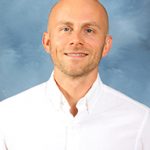
FPR prefers to stay on the edge of electoral politics, but we do take an occasional interest in politicians with localist convictions who are trying to break into the major parties, like Washington State’s Marie Glusenkamp Perez. Zach Lahn is running for Governor of Iowa, my adopted home state. He was good enough to speak to me by phone. The conversation has been lightly edited for length and clarity.
Zach Lahn You know, when we first connected, I was just considering running for office.
Adam Smith: I’m sure a lot has changed since then.
ZL: Of course, it’s really good winning the primary, but then there’s also . . . I move out of this state of being able to talk about my ideas and what I care about, and now it’s just turning into politics. And it kind of . . . it stinks. It just really stinks.
AS: Now you’ve got to play the game and run the race, instead of thinking about why you want to run the race.
ZL: I didn’t really want to get in this race. I’ve been working on my family farm, restoring native prairie, doing regenerative farming, moving cattle in. That’s what I wanted to do. And then I just saw this opportunity because of the issues I care about. And I had no illusion that I was going to win the primary.
AS: Well, I hope that this conversation allows you to talk more about the ideas. Because I’m not as interested in the horserace stuff as somebody else might be. And I’m not a reporter, you know; I’m a philosophy professor. I like talking about ideas.
Let me start with some big picture stuff. I think you mentioned when we first emailed back and forth that there was an FPR essay that maybe helped play a role in motivating your run I think it was Teddy Macker’s essay . . .
ZL: “American Spirit.”
AS: Yes. At FPR we have these core convictions—place, limits, liberty, a localist sensibility. But those convictions often scramble up the ideological categories of right and left. And with our readers and writers, there are people from both camps. I know you’re running as a Republican, and I think it’s pretty safe to say that you’re a conservative. But maybe you can talk about how you see yourself in relationship to those political categories, “right” and “left.” Would you call yourself a localist?
ZL: I will say yes. In the campaign, I talk about this Iowa First message just because it’s simple to communicate. People can grasp it once I talk about what those issues are: taking care of the state that we’re in, using the resources we have to benefit the people who live in our state, having local food systems and sovereignty that can support our communities, and looking at institutions in our state society and in our communities and how we use those to best benefit our people.
I remember reading one of the essays on your website that was talking about how universities have been long focused on solving global problems instead of local ones. Nowhere do I know a place that is in greater need of local problem solving from our institutions like universities in Iowa, with the fastest rate of new cancer in the country and with a looming farm crisis. We have one of the best medical research hospitals in the country, and we do have the best ag school in the country. And so, thinking from a localist standpoint, those institutions were created to help build and benefit our state by growing our people and preparing them to go back into their communities and build and improve.
I have no interest with being in Congress, being in the U.S. Senate, being ambassador to anywhere, being appointed to anything. I really believe in the 10th Amendment. And I think we’ve lost so much sovereignty as states that I’d like to start trying to bring back to the states, primarily through the courts, the opportunity to control our destiny.
AS: Is there anything about your localism that sets you apart a little bit from other people who might call themselves conservatives or Republicans?
ZL: Conservatives can’t just be about low taxes and regulations. (And, by the way, we haven’t historically just been about that.) If we’re not conserving the water, the soil, the people who live in our state, we’re just conserving the wrong things. Look, I love low taxes. But, you know, if your people are leaving the state faster than they are in 46 other states (which is the case for Iowa), and on the other end, if your people are dying quicker than they are in other states because of the cancer crisis, then it doesn’t matter if you have low taxes; you’re still not winning.
I’ve always loved history, especially Iowa history. When you look at the immigrants that came to Iowa, about 40% of the state was made up of German immigrants. There was a revolution that happened in Europe in 1848 that failed, and a lot of those people came here after that. 1846 was when Iowa came online.
They already had religious liberty, but they didn’t have the other liberties. And a great many things, as my great-great-grandfather Bill from Blairstown said, were streng verboten, strictly forbidden. And many of those things involved property ownership, the ability to inherit and pass on.
A lot of this, if you were in a feudal society, just was not possible. So they came here because they wanted to own the ground under their feet, build their churches, build their communities, pass something down to their kids, which they weren’t able to do in feudalist Europe. And so that’s what we’re here to conserve. The liberties that they came here for, I think at the state level is the best opportunity to pursue and conserve them.
AS: Besides ideas, can you talk a little bit about your background, and maybe what parts of your background might have motivated you to get involved?
ZL: I was born and raised in northwest Iowa. My dad was a 30-year conservationist and a pastor, and a graduate from Sioux City East. Went to Iowa Central for the first part of college. Got my pilot’s license there. I played football for a little bit of time. Went out to Boulder, Colorado for college. Interesting place for a Christian conservative from northwest Iowa, to say the least. With that being said, it’s also a beautiful place. There are a lot of things that have been conserved there.
And then, yeah, I got involved in politics. I wasn’t interested in politics before that. I was watching a discussion on health care at the university. At one point, I got kind of interested. And so I ran a few political campaigns after college, one in Colorado, one in Montana.
I moved back to Iowa in 2013 to Ankeny and bought my family’s farm back in 2014. I restored the whole thing, board by board, literally counting every piece of siding on the home from old pictures that I got from my great-grandma’s photo albums. And I put it back together exactly as it was built, exactly. Inside, we expanded a bit more because we had more kids. And then I bought back the family land in 2019. And then we’ve worked to expand that and move to a regenerative, organic farm that we operate right now. I share a crop with one of my best friends. And I’ve been working to restore the native prairie. We actually are in the last week of working with the Army Farm Engineers on a creek restoration project to help fix the creek and improve the water quality on our own land.
And beyond that, my goal was, how do I make Belle Plaine a place my grandkids want to be? How do I make our farm a place the kids and grandkids want to be? There’s a single-screen theater on Main Street. It’s been there since 1930 in Belle Plaine, operated by the same family from the Great Depression, World War II, and everything in between today. And it closed in 2023. That last member of the Mansfield family couldn’t really get up the stairs and take a film anymore. He closed it eight months later. I talked to him and he asked if I’d want to buy it. And I said, absolutely. And so we bought it, we reopened it, upgraded a lot of it, restored some of it. And we now show movies every Friday and Saturday nights. And we’ll have 100 to 200 people a weekend coming into our small-town theater, which used to have 5 to 10 people a weekend.
The connecting thread here is, I really wanted to restore. I wanted to stop the constant loss of things in our rural communities. So I was just trying to put my own effort and money where my mouth was.
I’ve also been involved in an education project. I was in Kansas from 2018 to 2023, helping to start a school down there. On the business side, I did venture brokerage. I helped connect startup venture businesses with people that had investment funds. And I also did business consulting for a number of years and started investing in real estate and businesses myself.
But then put all of that effort back into our farm and community, which is what we’re largely doing today. I still run the businesses. They’re very small, very boring, just by design. But my goal now is to restore my community. I wanted to plant a flag there. So we also owned the Chicago Northwestern Depot in Belle Plaine.
I think all this comes from being raised by a conservationist and a pastor who taught stewarding creation. And then coming back to my own family homestead, working the community and restoring the land. It’s what I love to do. So this decision to get into the governor’s race was not at all planned. I had no intention to do it. I’m doing it because the same issues I care about on the local level, I saw an opportunity to advocate for them on the state level.
AS: The school you mentioned is one of the things I wanted to ask you about. And now I want to get into some more specific issues, like education. One of the debates that we sometimes have at FPR is about education. On the one hand, you can think that being committed to your local community involves supporting your local public schools.On the other hand, a lot of us at FPR are homeschoolers, or we send our kids to classical Christian schools, or similar things. Could you talk first a bit more about that project that you were involved in? And then, just in general, how do you think about education? How would you think about education, public education as a governor?
ZL: This is a deep topic. I spend a lot of time on this.
You know, I had no interest in education. Actually, my entire life, I just wanted to get out of school. I wanted to get into the real world, into business and things like that. The day after our first child was born, my grandma’s brother called me. He said, congratulations, now you need to start thinking about school. And I thought, what? But then I thought back to my experience in school. I was one of the kids that had maybe too much energy, to put it lightly. And so I said, I don’t care what I have to do. If I have to start my own school or move somewhere or whatever, I want to find a better opportunity for my kids.
At the time, I was living in Montana. I spent about two years traveling the country, when I was out doing business dealings. And I’d visit the most innovative schools I could find. Often I’d try to set up things for business around where a school was that I wanted to visit, so I could do both things. And, you know, the way I look at it is very—I came to this—I remember reading something that Jeff Bezos said about what you need to have if you want to start something new that you don’t know anything about.
He said, you need to have talented people, a long-term orientation, and a beginner’s mindset. And I absolutely had the beginner’s mindset because I didn’t know anything about it. But what I learned is kind of my theory on something like this.
What education really is, is a prediction of the future. What does the next generation need to know to be prepared for a rapidly changing future, primarily vocationally, on the rapidly changing part? But there are other parts that are immutable. There’s character. There’s your civic duty. Are you a good person? How well do you work with other people? These things don’t change, but education does and should have a role in helping with that formation.
On the other hand, when it comes to the vocation side, we’re really just trying to make a prediction of the future. I remember when I was first starting the school in 2018. I was reading something from McKinsey about how in the next 10 years, all coding will be done by computers. Back then, people were saying, “if you want to have a good career, learn computer science and programming.” But other people were looking at it saying, “that’s not at all the case.” And now we see it’s happened faster than we thought. One of the top 10 coders in the world is Google’s AI platform. And very quickly, that will become number one because it just needs more iteration.
I visited a lot of different schools, and I largely found that education was mostly the same. The idea was that students are vessels to be filled, so to speak, rather than the old idea of kindergarten, the idea that people have to be grown, which is what I firmly believe. So I ended up partnering with a handful of schools. The main one is a school called Acton Academy in Austin, Texas. I joined the leadership of Acton early on, and we’re now over 300 schools across the country. The ultimate idea in our schools is that young people are capable of far more than they’re being challenged with today, far more. And one of the chief goals of a school should be to help young people develop agency because ultimately, that’s what we want them to be: people with good morals and values that are self-directed problem-solvers, who can see the world, see the problems in the world, and see how they uniquely fit into that, and can help solve those problems to make life better for themselves, their families.
My firm belief is that the traditional school is actually doing the opposite of helping young people develop agency. It’s actually helping them to develop dependency. In life, there’s not somebody standing over your shoulder all the time giving you the answers to things. You have to just learn to figure things out and solve problems. I often say traditional schools are run by adults, whereas our schools are run by systems, and the young people have say over the systems. If you look at our school, the Wonder School or Acton Academy, they are miniature civil societies. You have contracts, with the Constitution that they help create at the beginning of every year. You have town hall meetings every Wednesday. You have conflict resolution sessions when people aren’t getting along. You have high schoolers who run the council for the school that actually decide on disciplinary actions. And the whole thing is developed to give young people agency to the point where at some of our schools, the more mature high schoolers are actually running a lot of the school. And they’re doing an amazing job at it. Better than an adult would do because they have a better understanding of what people are going through.
So, yeah, that’s a basic overview of the ideas and philosophy. If you have specific questions, I’m happy to answer them.
AS: Maybe just a little bit more on public education. You mentioned the system, and I tend to agree, promotes dependency rather than agency. But there could be different views on what you do about that.
Do you try to reform the system we have, or do you go more in a school choice direction and let a hundred flowers bloom?
ZL: My personal opinion is that we need both. I think the hundred flowers blooming should also include our public schools. School choice is a foundational freedom that parents should have more say over where their tax dollars are spent, more say over where their kids go to school. However, something that’s kind of separated me from some of the traditional Republican talking points, I guess, is that my firm belief is that the governor of the state has to be the number one advocate for the public school kids in the state. But the question becomes, what do we do? Because the system’s broken. And it’s not just that it’s broken, but many parts of it are completely obsolete.
I’m a firm believer in the history and heritage of our public schools. I always have been. That being said, when I was a kid in the 1990s in Northwest Iowa, we were number one in the nation for education, and we dropped 27 points while we’ve increased per person spending by 50% inflation adjusted.
So the answer to a system that’s failing as finances are increasing above the rate of inflation is not to eliminate your competition. The answer is to make your system better. What I envision for the state of Iowa with this is not that every public school looks like the schools I started. I think there are great things with public high schools. I think there are great things with different types of micro schools, with very hands-on projects-based schools.
That being said, the idea is that we give innovation waivers to public school districts and superintendents who would like to have them. The governor can do that unilaterally, actually. That way, we allow them the freedom to bring in a concurrent model of school that parents can opt into, kind of a startup model. The beauty is that these are not experiments. These have been proven all over the country. And we allow them to bring that in. Again, it’s a concurrent model. Parents can opt into it. Teachers, especially as young teachers, will have a budget for training on it. It’s already there, by the way; this budget is there. And then you will allow the hundred flowers to bloom within our public schools. The best models will rise to the top. We’ll have friendly competition between our public and private schools. Unless you’re looking specifically for a religious school, my ultimate goal would be that our public schools are so good, parents aren’t looking anywhere else. And we can do that primarily through innovation waivers.
But you can be as innovative as you want, and if you don’t solve the cultural issues within our public schools, it’s not going to take. Because there are children within these classrooms who are in need of great help. I often say that 95% of a teacher’s time is spent with 5% of the kids. These are kids who are having a true issue integrating into the classroom, behavioral issues often, things like that. And the teacher’s not a behavioral therapist. So the other innovation that I would lean on is to lead the country in creating non-punitive offerings for these kids who really need one-on-one small group care and help, with the whole goal of restoring them to come back into the classroom. That’s also a part of the history and traditions of the state. Our institutions, many of them, were built on restoration of the individual. Alexis de Tocqueville talked about this in Democracy in America, about the prison system in the United States, and how unique it was compared to European prison systems, because American prisons were built on restoration, and getting people back into society. So I think, for me, that’s a deep part of the faith that our country has been founded on.
AS: We were talking about how education is a prediction of the future, and how all of our predictions about the future have been upended. Let me use that to switch a little bit. I also wanted to ask you about data centers. The issue has finally come to our hometown. Everybody’s up in arms about it. This is one of those issues that seems to bring everybody together in opposition. I don’t think you are opposed in principle to building data centers, but I think you’ve called for a moratorium, is that right?
ZL: Yeah. You know, here’s what I am opposed to in principle. I’m opposed to the pattern that we’re seeing when it comes to the deployment of technology, and that is that we first deploy it in a very fast breakneck speed, and then after it’s deployed and we figure out there’s issues with the deployment, then we figure out how do we reel this back, in which case it’s very difficult sometimes.
The more people are waking up to these things, the quicker we’re realizing the problems and sometimes the infringements on rights, like the Flock cameras that we’re seeing all over the place. I mean, these are a Fourth Amendment violation, and a private company is holding the data.
You look around the country and you’ll see states who have sued or states that have been sued and find out a tremendous amount of access to decision-makers has been given to people who should not have had access. So that I see over and over again. All of a sudden we have over 100 data centers in the state of Iowa, and it seems as if not only have they just gone up very quickly, but we’ve negotiated extremely poorly on these deals and we didn’t take into account the second or third order consequences of what this would do to the environment, to the water quality.
States like Virginia have seen consumer electricity rates go up by 32% in these areas. So my stance on data centers has been, well, number one, I understand many of the issues that people are concerned with. As governor, what would I do? We need to set the negotiating floor. That means no tax incentives whatsoever. You have to pay for your electricity. The environmental concerns have to be taken care of. And I think we’d set that out specifically and say that if you want to come here, these are the basic rules of the game. I do believe this is a local issue. I think counties should have a say. Some counties are going to say yes. Others will put in place moratoriums. But it’s not every day you have the world’s largest companies knocking on your door asking you for something. So I think it’s incumbent upon us to at least hear out the proposals. And what do we want to do? Ohio actually put forward this proposal, which was that a data center that comes into a community has to pay for all the residential power use in the community. That’s pretty bold. I’ve not been asking for enough apparently! But I have had conversations with some of these companies at this point. And within a couple minutes of talking to one of the largest ones, they said, “we get it. We hear you. We don’t want any more tax incentives. We want to pay our fair share.” That’s encouraging. The disappointing part is if you look at the data center by me, outside of Cedar Rapids, 1,400 acres of topsoil was taken off. They received $529 million in property tax abatements to create 30 long-term jobs.
AS: That’s crazy.
ZL: It doesn’t make any sense. So, I’m not somebody who says that we should abandon outright. But I do think we need to put the negotiation floor in before more go in. And then let counties determine if they can find sort of a mutual benefit relationship there.
AS: What you said there was interesting. I think what you were saying is that the opposition they’re generating is maybe not even so much about the specifics of data centers. It’s more like we have just gotten really used to all kinds of things happening really fast that we didn’t have a chance to think about, which turned out to have a lot of problems, and now we’re more skeptical. There might be other examples like that. That leads into one of the other things I wanted to ask about. I think you were maybe one of the first candidates that MAHA endorsed or something like that, is that right?
ZL: Yes, first candidate that they endorsed.
AS: That seems to be a movement that is also concerned with things happening fast technologically that people haven’t had any say about. Could you talk a bit more about that? What does “MAHA” mean to you? And how do you think its specific concerns might show up if you were to be elected?
ZL: Well, you know, I think I’ve been advocating for MAHA before MAHA was a thing, when it was just an idea about healthy living, healthy communities, good science. I think MAHA has been an awakening. I think COVID played a huge role in this, by the way. You mentioned it seems to a group that’s maybe looking at things happening too fast. I actually think it’s more about the fact that our federal agencies have been captured for a very long time.
The groups that were established to protect the consumer, protect the patient, have been captured by big business and industry. You can look at agricultural conglomerates that have incurred tremendous favor that they should not have with the EPA. Or you can look at big pharmaceutical companies that now are pushing interventions that have far more serious adverse effects than other interventions that 30, 40 years ago, were pulled directly off the market. For instance, the swine flu vaccine in the 1970s had an adverse effect rate of 1 in 100,000. It was pulled off the market. The COVID vaccine is 1 in 800, and it’s still there. So I think this is more of a movement about taking things back and wanting to have truth in science, and also just common sense. When Robert F. Kennedy Jr. flipped the food pyramid, that was something that many of us on the ground just knew for the longest period of time, that you need good quality meats more than you need a tremendous amount of carbs. That’s a very specific example.
I remember in 2016, Donald Trump was on the debate stage, and Dr. Ben Carson was up there too, and they were asked about vaccines. And they went to Ben Carson, who’s a neurosurgeon, and he said, well, at the very least, we should spread them out. So we’re not just giving them to a small infant and one-year-old child. And that was just a common sense idea, just very common sense. When you have something going into your body that creates inflammation by design, that’s how it actually works, having too much of that can create too much inflammation and have negative consequences. Today, even saying that gets you called “anti-vax.” But we’re just talking about common sense ideas. The question I think people in the MAHA movement, and whatever it was called before it was the MAHA movement, are proposing is just, why do we do things the way we do it? Why do the corporations have the control they have? Why do the big agricultural companies control so much of the science that goes into the EPA registration process for pesticides? Why is this the case?
It’s about corporate capture and citizens just wanting to be able to have more say over their health, their bodies. And the idea that you should not have to take a medical intervention to participate in society.
AS: Is there some kind of overarching problem that we face as a country right now that all these things have in common? Is there some way to think about the big problem, or is that not the right way to think about it?
ZL: No, I think it is the right way. I point back to two things. One is dependent on the other. The first is consolidation. That’s been happening in industry after industry. So the agricultural companies used to be 300-400 operating even less than they can. Now there’s three that control 85% of the market. Four groceries control 80% of the grocery market. You can look at health care. There’s been hundreds of acquisitions over the past 20 years. And it’s increased heavily since Obamacare was passed.
But then what that allows for is the second piece, which is extraction. If I’m on the campaign trail and I’m with a group in a rural community, I’ll ask a question: what’s the one new sign, new store that’s going up in all these rural communities? And I don’t have to give any hints on it. They just know right away it’s Dollar General. And who’s the largest shareholder? It’s BlackRock. We have a financial consolidation of capital that’s allowing for an extraction out of our communities.
In our local rural communities, we’ve long had these country food stores that are locally owned. And now they’re being put out of business in a large way. That money used to stay and circulate in the community. Now it’s being shipped to Wall Street. There is an extraction that’s happening through consolidation and concentration of capital.
That, I believe, is a product of not enforcing antitrust laws in our country. That’s my personal opinion. And I believe that that’s a free market idea. A monopoly is a failure of a free market. In the 1980s, we moved away from mergers being scrutinized on a long-term basis. Meaning, if these companies merge, will it create reduced competition in the long term? Now we only look two years out—will this merger reduce competition in the next two years? If it doesn’t, and if they can prove that, they’ll allow it to proceed.
And you can see the product of that, of the concentration of capital and the consolidation of industry. That, I believe, is reducing local control and ultimately hollowing out a lot of our rural communities. Blackrock is right now buying single-family homes in Des Moines, Iowa. They’re buying them and renting them back to Iowa’s young people. Every sector of the market right now is being looked at as a way to extract.
Private equity is getting into funeral homes, cremation services. They’re getting into care facilities. All of these places are looked at as opportunities to buy and roll up. We’re losing local control. And we’re losing, I guess—the local spirit of it is really what we’re losing.
AS: That leads us back to the big picture. You mentioned reading FPR. Is there any other book or writer or intellectual source that’s in the background when you talk about these kinds of things? When you think about it in terms of consolidation and extraction and so on? Who are your influences?
ZL: Well, Teddy Roosevelt’s one of my favorites. I think his story is unbelievable. And the American spirit that just exudes from him is something that we should really seek to emulate. He believed in stewarding creation and being an American. He was speaking to Nebraska in the early 1900s about how anyone who says they’re an American and something else isn’t an American at all, and that there’s only room for one flag in our country. That was not a controversial statement back then. He was actually talking to German immigrants in Nebraska. We were at war with Germany, and he wanted to remind them that it means something to be American. But I really respect the crusade he was on that was influenced by his life experiences.
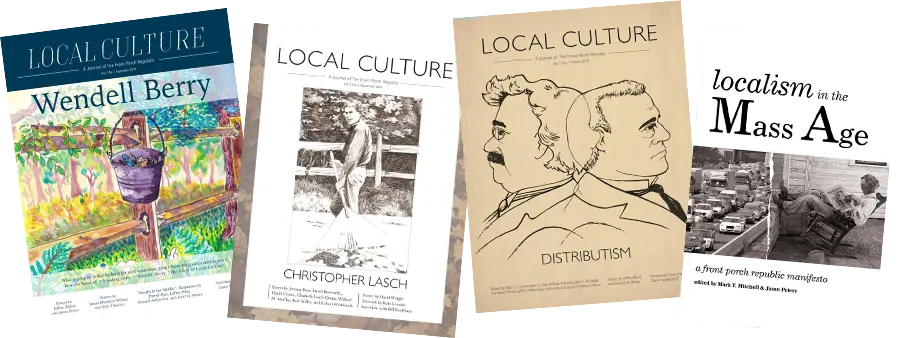
So right now I’m reading The Rise of Theodore Roosevelt. And I’m going through The Strenuous Life essays again. And then I think it’s probably pretty traditional, but I really like a lot of Wendell Berry’s work when it comes to looking at what’s happened in our rural communities and our family farms. And also Allan Carlson’s The Natural Family.
AS: Last question. However you would describe your kind of politics—maybe a Teddy Roosevelt localism—what’s your sense of the long term future of this way of thinking? You can hope to win the governorship, but what’s beyond that?
ZL: What I’m trying to get forward here is not a set of policies or regulations that I want to change. There’s plenty of those things. I’m wanting to get back to an understanding of why people should be seeking public office in the first place and what they’re here to do. And ultimately, that’s where this idea of Iowa First comes back into play. The government and economy of Iowa needs to be focused on making life better for the people who live in the state. In large part, that means giving as much agency to the localities as possible and pushing decisions as low as possible to allow for the greatest amount of liberty and flourishing. Thriving local communities can and would be here, but for the lack of enforcing the laws that are already in the books, in many cases. That’s what I’m fighting for.
AS: Thank you, Zach. I really appreciate you taking the time to talk to us.
ZL: Thanks, sir.

1 comment
William Schwartz
Hi, I’m actually in Iowa right now, living adjacent to this campaign. Lahn is a weasel, and he’s every bit as much of a weasel in this interview as he is in his ads. We all know he’s blowing smoke about wanting his farm to be a home for his kids. He’s had seven years to actually move his family out here and couldn’t even be bothered to do it when he knew he was prepping a gubernatorial campaign premised on his being a local boy. And he very carefully phrased his answer in this interview to avoid acknowledging that.
If he wins, a big if at this point, it will only be thanks to Trump’s coattails. Even his own supporters know he’s a fraud. Shame on Front Porch Republic for taking him at his word. He’ll ditch this state in a snap just like he did his last few politically motivated “homes” if he loses and we all know it.