

Over at “Inside Catholic,” one of their stable of writers, Eric Pavlet, expresses excitement in discovering thoughts on economics that eschew the contemporary statism vs. free market debate. FPR even gets a shout-out in the comments, nice to see. We now have six Catholic Supremes and a Catholic Vice-President (sort-of). Could a Catholic economy be in the offing?


Now explain to me again how one gets the right to take other people’s property and “distribute” it to someone else? That one got by me. Are not theft and sloth sins? Are property right not inalienable, God-given rights?
Oh and explain to me, while you are at it, how free markets do not work, and that a free people deserve less than a free market?
By what right does government have to interfere, the “Right of Kings”?
As a RC I am ashamed that the Church is going down this route. We know well from the Christian Democrat movements of 19th century Germany were it leads: Fascism and Neo-paganism or Scientism.
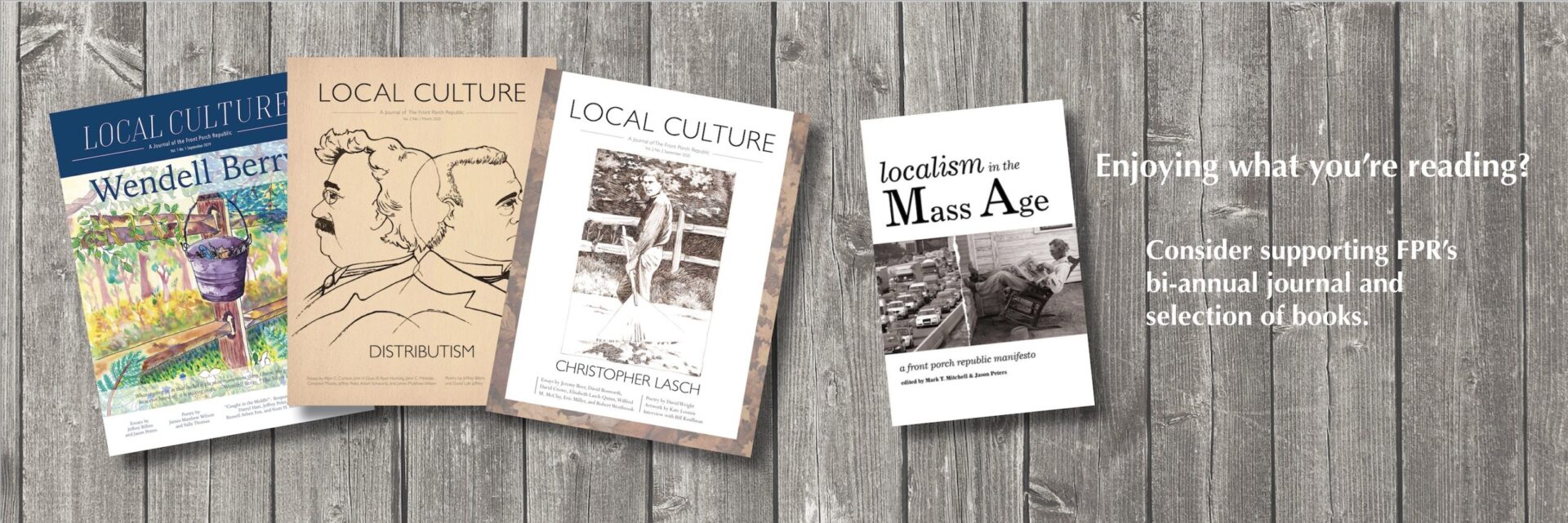
Capitalism and free markets have been the greatest source of freedom, progress and the welfare of man that the world has ever seen. Leftward leaning “clerical apparatchiks, no doubt European or their third world epigones, inside the church hierarchy should be shown the door. They engage in a great many sins here. The prior pope was well aware of this–witness his denunciation of “Liberation theology”, which is, of course, Marxism cloaked in ecclesiastical robes. So is “distributism”.
It is theft, pure and simple.
Man must live by the sweet of is brow, not by immoral government fiat in order to rob his neighbor.
Christ was neither collectivist or a socialist. The Church needs to tend to men’s souls, not their political relationships. Catholics who countenance Marxism are playing with great evil.
We understood this sort of dishonest propaganda during the cld war, we need to come to grips with creeping socialism.
Mongoose, the word distributism is not used as a verb but as an adjective.
As in: Distributive Ownership.
Another word for that is, Proprietorship.
If anything, Distributisms wishes to liberate “Free Markets” from the Government/Capitalist collusion that makes the markets anything but free.
There is no thievery involved in promoting a broad ownership of productive property.
You really need to research before you rant.
A Catholic economy… Since most Catholics (even the Magesterium) don’t understand the objective importance of robust anti-statist/free market principles, this is quite a scary thought. I recommend reading Thomas Woods’ “The Church and the Market.”
Catholic Social Teaching with its emphasis upon subsidiarity is no doubt amenable to American economic practice, as it firmly locates authority at the level of action: individuals and civil society. Yet an emphasis upon ‘positive subsidiarity’ (Compendium of the Social Doctrine of the Church, §186) implies a role for the State as a temporary means of last resort that may unsettle libertarians. Extrapolating further, a case can be made that CST’s personalist principle makes a distinction between ‘autonomous persons’ and ‘individuals within community’ that can be used to justify universal public welfare provisions, such as healthcare. Even moderate Republicans will be uneasy with this prescription. CST, then, in itself is no panacea to the debates between the State and the free market.
oops! the correct url for above.
“Since most Catholics (even the Magesterium) don’t understand the objective importance of robust anti-statist/free market principles, this is quite a scary thought.”
Distributist thought isn’t anti-market. It’s pro small market. What it’s opposed to is corporate capitalism, which is a horse of a different color. It is suspicious of both big business and big government, and especially suspicious when the two collude.
“What it’s opposed to is corporate capitalism”
I think if we want to end corporate capitalism, we have to take a serious look at its great engine, namely Congress. As such, it doesn’t mean how many Catholics or anti-trust laws we have running the machine, since it favors large economies of scale through rent seeking regulation. If distributists are serious in bringing about a common good that allows room for the smaller (communities, market places, and intermediate institutions) they need to consider what kind of mistake the national Constitution has been.
Like I said before, it’s not “it’s the Economy stupid,” rather it’s the Constitution stupid!
If distributivism necessarily must begin with confiscation, then in fact it should be opposed. There is a word for this. It’s called “stealing,” and it is immoral, even in Catholicism.
However, distributivism properly understood is less a system or plan, than a canon for making decisions regarding the political economy, with a regard for their societal impact. It means–when faced with a decision regarding the political economy–that decision-makers consider whether the legislative act will result in property flowing from greater to lesser distribution, rather than just whether the act will allow us to get more junk for less (in the short run). The latter may justify the act in some instances, but this judgment should not be reflexive without consideration of the former.
In practical terms, it means forcing government to stop supporting redistribution of property, particularly productive property, from the hands of the many to the hands of the few (actually artificial persons nowadays). This may include moratoriums on new roadways, zoning laws, tax breaks, educational incentives, or even (Heavens!) encouraging “business investment” through the facilitating of holding productive property in devices that shield stakeholders from liaiblity. None of these aforementioned devices constitute a free market. No one has a God-given right to incorporate.
And hopefully some Catholics will begin to understand the importance of opposing robust anti-statist/so-called “free market” principles. There are no God-given rights directly to the individual, in the manner suggested by some. That a person has an initial right within a tribe, e.g., a right to a piece of ground, is a function of the tribe.
I love a figure like Mongoose, who is happy to share out of the abundance of his ignorance rather than take the minimal time necessary to have that ignorance cured. This, my friends, is what Fox News Catholicism looks like.
Comments are closed.